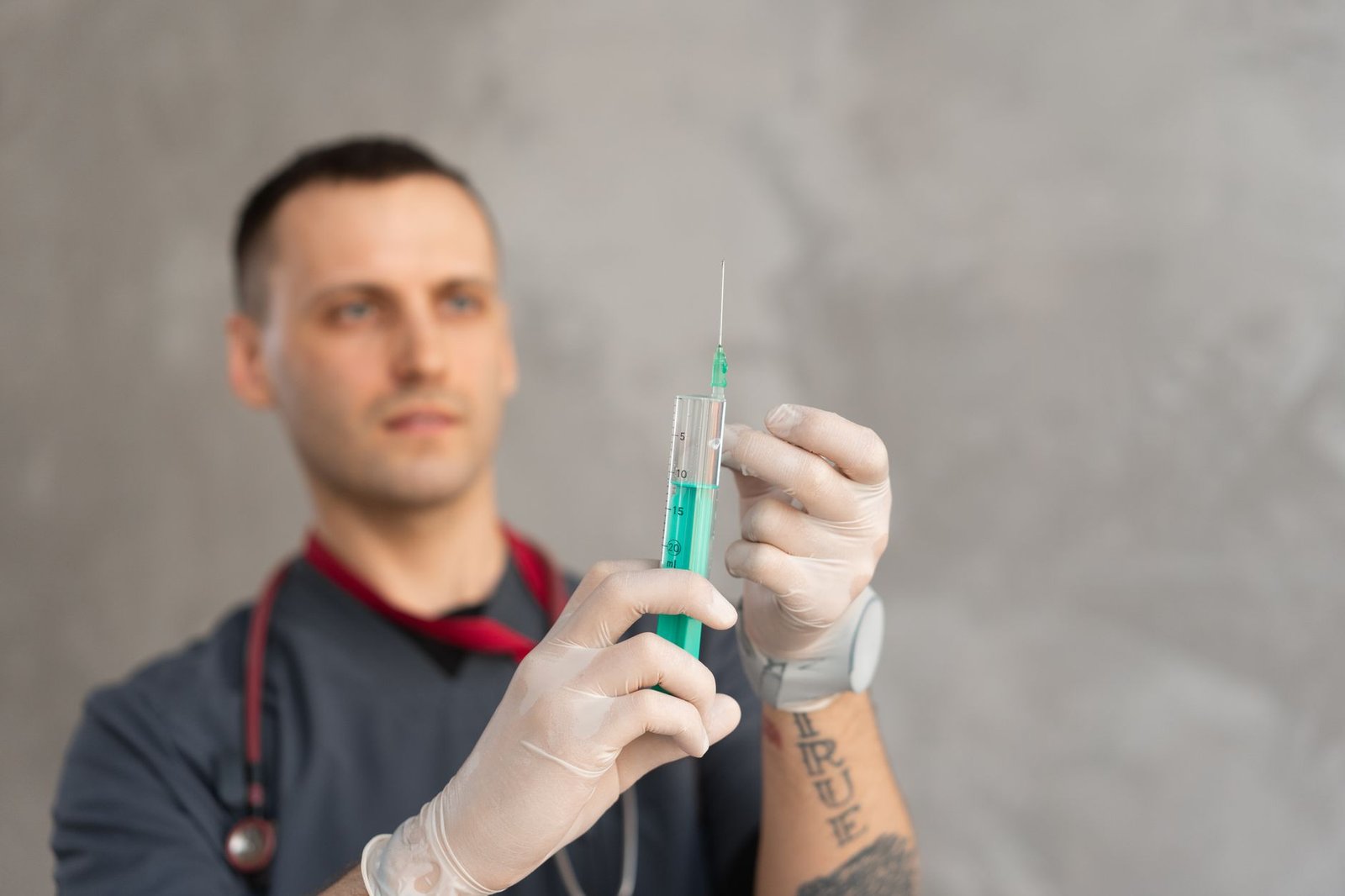
If you or someone you love is researching stem cell therapy, you have probably already encountered a wall of scientific language, conflicting claims, and more questions than answers. This guide cuts through all of that. Here is what stem cell therapy actually is, what it can and cannot do, and what you need to know before taking the next step.
What Are Stem Cells?
Stem cells are the body’s raw material — the master cells from which all other specialised cells are generated. Unlike a skin cell, which can only become more skin, or a muscle cell, which can only become more muscle, a stem cell has the unique ability to develop into many different types of tissue. Think of them as biological blank slates.
Your body uses stem cells constantly, quietly repairing damage, replacing worn-out cells, and maintaining tissues throughout your lifetime. The problem is that as we age, the number and effectiveness of our stem cells declines significantly. By the age of 35, stem cell activity has reduced by roughly half. By 65, it has fallen further still — which is one reason recovery from injury and illness becomes slower as we get older.
How Does Stem Cell Therapy Work?
Stem cell therapy is the medical use of stem cells to repair, replace, or regenerate damaged or diseased tissue. The approach varies depending on the condition being treated and the type of stem cells used, but the core idea is the same: introduce stem cells into the body in a way that supports healing where the body’s own repair mechanisms are no longer sufficient.
There are several main approaches currently in use:
Autologous Therapy
Stem cells are harvested from the patient’s own body — typically from bone marrow or fat tissue — processed, and then reintroduced. Because the cells come from the patient themselves, there is no risk of immune rejection. This is one of the most widely used approaches for orthopaedic conditions such as knee and back pain.
Allogeneic Therapy
Stem cells are sourced from a donor — often cord blood or bone marrow from a matched donor. This approach is standard in treating blood cancers such as leukaemia, lymphoma, and multiple myeloma, and has decades of clinical evidence behind it.
Exosome Therapy
Rather than transplanting whole stem cells, exosome therapy uses the signalling molecules that stem cells release — the chemical messages that tell surrounding cells to repair and regenerate. This is an emerging approach with growing interest in conditions affecting the brain, joints, and immune system.
What Conditions Are Being Treated?
Stem cell therapy is currently used or actively studied for a wide range of conditions. Some applications have strong clinical evidence behind them. Others are in earlier stages of research. It is important to understand the difference.
Well-established uses (FDA approved or widely accepted):
- Blood cancers — leukaemia, lymphoma, multiple myeloma
- Bone marrow failure conditions
- Certain immune system disorders
Emerging and actively researched uses:
- Osteoarthritis and joint pain (knee, hip, shoulder)
- Multiple sclerosis
- Parkinson’s disease
- Autism spectrum disorder
- COPD and lung conditions
- Heart failure
- Spinal cord injury
- Traumatic brain injury
For the conditions in the second list, therapies are available — particularly at international clinics in Mexico, Panama, and Germany — but patients should understand that evidence levels vary significantly between conditions and providers.
What Does Treatment Actually Involve?
The treatment process depends on the type of therapy and the condition. For bone marrow transplants, the process involves harvesting, processing, and infusion over several days or weeks. For orthopaedic injections, the procedure is often completed in a single clinic visit.
Most patients at international stem cell clinics follow a process that looks something like this:
- Initial consultation and medical assessment
- Diagnostic testing and treatment planning
- Cell harvesting (if autologous) or preparation of donor cells
- Administration — via injection, infusion, or both
- Recovery period and follow-up assessment
How Much Does Stem Cell Therapy Cost?
Cost is one of the most searched questions — and the answer varies enormously. In the United States, a single orthopaedic stem cell injection can cost between $3,000 and $10,000. Comprehensive systemic treatment programmes at international clinics typically range from $8,000 to $25,000 or more.
Standard health insurance does not cover most stem cell therapies outside of established treatments like bone marrow transplants for cancer. Medical tourism — particularly to Mexico and Panama — has become increasingly popular precisely because the same quality of treatment can cost 40–60% less than equivalent US programmes.
For a detailed cost breakdown by condition and country, see our Cost and Insurance guide.
How Do I Find a Reputable Clinic?
This is the most important question of all. The rapid growth of interest in stem cell therapy has unfortunately attracted providers who make exaggerated claims or operate without adequate medical oversight. Knowing how to evaluate a clinic is essential.
Key things to look for:
- Licensed physicians overseeing all treatment
- Transparent published protocols — what cells, what source, what dose
- Independent patient reviews (not just testimonials on their own website)
- Willingness to provide realistic outcome data, not just best-case stories
- Clear follow-up protocols after treatment
Use our free Clinic Finder to learn how to find and vet providers for your condition and location.
The Bottom Line
Stem cell therapy is not science fiction — but it is also not a universal cure. For certain conditions, it represents the most exciting frontier in modern medicine, with genuine evidence of benefit. For others, it remains experimental, with real promise but less certainty.
The most important thing any patient can do is arrive informed: understand what type of therapy is being proposed, what the evidence shows for your specific condition, what the realistic outcomes look like, and what the total cost will be.
That is exactly what this site is here to help you do.
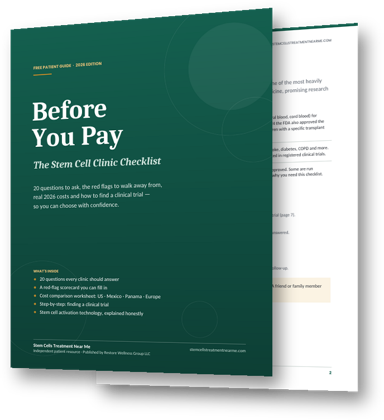
Before You Pay: The Stem Cell Clinic Checklist
- 20 questions every legitimate clinic should answer in writing
- A red-flag scorecard to spot unregulated marketing
- Realistic 2026 cost ranges: US, Mexico, Panama & Europe
- How to find a registered clinical trial
Medical Disclaimer: This article is for informational purposes only and does not constitute medical advice. Always consult a qualified medical professional before pursuing any treatment. See our full Medical Disclaimer.
Ready to explore your options? Use our free Clinic Finder to learn how to find and vet a legitimate stem cell clinic near you.