
The regulatory landscape for CAR-T cell therapies continues to evolve rapidly in 2026, with the FDA expanding its approvals to include new products and new indications for patients with relapsed or refractory lymphoma. For patients who have run out of standard treatment options, these approvals represent a significant and potentially life-changing development — but understanding how to access them requires navigating a system that can feel complex from the outside.
Understanding the CAR-T Approval Landscape in 2026
CAR-T cell therapy works by extracting a patient’s own T-cells — a type of immune cell — genetically engineering them in a laboratory to recognise specific proteins on cancer cell surfaces, and infusing them back into the patient. The FDA has now approved multiple CAR-T products for blood cancers, and the approved indications continue to expand as long-term trial data matures.
The most recent approvals have extended to patients with relapsed follicular lymphoma who have failed two or more prior lines of therapy, and to patients with relapsed diffuse large B-cell lymphoma (DLBCL) in an earlier line of treatment than previously covered. These expansions are significant: they make CAR-T available to patients earlier in their disease course, rather than reserving it as a last resort.
What This Means for Patients
For a patient who has been told their lymphoma has returned after chemotherapy or prior targeted therapy, the existence of an FDA-approved CAR-T option means several things practically:
- Insurance coverage is likely: FDA approval is the threshold most major insurers and Medicare use to determine coverage. For approved indications, patients should be able to access CAR-T through their insurance, though prior authorisation is required.
- Treatment is at specialist centres only: CAR-T is not available at community oncology practices. Patients must be referred to one of the approximately 150 authorised treatment centres in the United States — predominantly academic medical centres and large cancer hospital systems.
- The process takes time: From referral to infusion typically takes four to six weeks, including the leukapheresis (cell collection) appointment, manufacturing, insurance authorisation and the preparatory chemotherapy phase. Patients whose disease is rapidly progressing should raise CAR-T eligibility with their oncologist as early as possible.
How to Access a Newly Approved CAR-T Therapy
The pathway to access begins with your oncologist. If you or a family member has relapsed lymphoma and has been treated with two or more prior therapies, the conversation about CAR-T eligibility should happen at your next appointment — or sooner if you can secure an earlier appointment.
Key questions to ask your oncologist: Am I eligible for any FDA-approved CAR-T therapy based on my specific diagnosis and treatment history? Which authorised treatment centre would you refer me to? What is the expected timeline from referral to treatment? What are the most common side effects I should prepare for?
For patients who do not yet meet the eligibility criteria for approved products, clinical trials for new CAR-T indications are continuously enrolling at major cancer centres. ClinicalTrials.gov allows you to search by diagnosis and location to find trials that may be appropriate for your situation.
The Broader Significance of Expanding Approvals
Each new CAR-T approval represents more than access for one specific group of patients. It also represents accumulating evidence that T-cell engineering approaches work — and that the field is maturing from experimental breakthrough to established therapeutic option for blood cancer patients. Researchers are actively investigating whether similar approaches can be adapted for solid tumours, which present different biological challenges. The pace of progress in this area makes it one of the most important developments in oncology of the past decade.
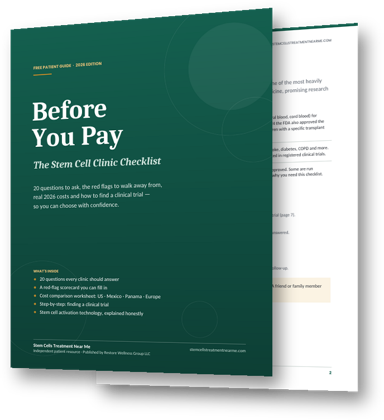
Before You Pay: The Stem Cell Clinic Checklist
- 20 questions every legitimate clinic should answer in writing
- A red-flag scorecard to spot unregulated marketing
- Realistic 2026 cost ranges: US, Mexico, Panama & Europe
- How to find a registered clinical trial
Medical Disclaimer: This article is for informational purposes only and does not constitute medical advice. Always consult a qualified medical professional before pursuing any treatment. See our full Medical Disclaimer.
Exploring your stem cell options? Use our free Clinic Finder to learn how to find and vet a legitimate stem cell clinic near you.