Imagine a future where your own immune system could be supercharged with an unlimited supply of cancer-fighting cells, grown in a lab and ready to battle tumors on demand. That future just got a little closer. Researchers at the University of Southern California (USC) have made a remarkable breakthrough that could change the way we think about cancer treatment — and for patients exploring regenerative and cell-based therapies, this news is worth understanding.
What Did USC Scientists Actually Discover?
Scientists at USC announced a significant development: they have found a way to produce what amounts to an endless supply of cancer-fighting immune cells. According to reporting from ScienceDaily, the USC research team unlocked a method to generate these specialized immune cells in a way that wasn’t previously possible at scale.
To understand why this matters, it helps to know a little about how your immune system fights cancer in the first place.
Your Immune System’s Natural Cancer Fighters
Your body already has cells designed to seek out and destroy abnormal cells, including cancer cells. These are called natural killer (NK) cells and T cells — think of them as your immune system’s special forces. In healthy people, these cells patrol the body constantly, eliminating threats before they grow into serious problems.
The challenge has always been this: when someone has cancer, these immune soldiers can become exhausted, outnumbered, or “tricked” by the tumor into standing down. For decades, researchers have tried to find ways to boost or replenish these fighters — and that’s exactly what the USC team has taken a major step toward achieving.
How Did They Do It? A Simple Explanation
The USC scientists used stem cell technology to create a renewable source of immune cells. Stem cells are the body’s “master cells” — they have the remarkable ability to develop into many different types of cells, including immune cells. By coaxing stem cells to become cancer-fighting immune cells in the laboratory, the researchers discovered a method to produce these cells consistently and in large quantities.
Why “Endless Supply” Is Such a Big Deal
One of the biggest limitations in current cancer immunotherapy — treatments that use the immune system to fight cancer — is availability. Many existing therapies require collecting immune cells directly from a patient, modifying them in a lab, and infusing them back. This process is time-consuming, expensive, and doesn’t always yield enough cells to be effective, especially if a patient’s immune system is already weakened by cancer or chemotherapy.
By creating a scalable, renewable source of these cells from stem cells, USC researchers may have solved one of the field’s most persistent bottlenecks. In theory, this could mean more patients gaining access to powerful immune-based cancer treatments — faster, more affordably, and with greater consistency.
What Does This Mean for Patients Today?
It’s important to be clear: this research is still in its early stages. While the findings are genuinely exciting, it will likely take several years of clinical trials and regulatory review before any treatment based on this discovery becomes widely available to patients. Science moves carefully — and for good reason. Safety and effectiveness must be rigorously proven before any new therapy reaches you.
That said, this breakthrough is part of a much larger, rapidly growing field of cell-based therapies that is already producing real results for real patients today.
How This Connects to the Stem Cell Therapy Landscape
The USC discovery sits within the broader world of regenerative medicine, where stem cells and immune cell therapies are being studied and, in some cases, already used to help patients with a range of conditions — from joint pain and autoimmune disorders to certain cancers. Many clinics around the country are currently offering stem cell-based treatments that have shown promise in clinical settings, and research like USC’s is part of what continues to push the field forward.
For patients aged 40 and older who are living with chronic illness, exploring treatment options for cancer, or simply interested in what cutting-edge medicine looks like, understanding these developments helps you ask better questions and make more informed decisions about your care.
Key Takeaways for Patients Exploring Cell-Based Therapies
- Stem cells can be guided to become immune cells. This is the core of what USC demonstrated — and it opens enormous possibilities for future therapies.
- Scalability has been a major barrier. The ability to produce large quantities of these cells reliably is a genuine scientific milestone.
- This research is early-stage but meaningful. It contributes to a foundation that could transform cancer treatment in the coming decade.
- Cell-based and regenerative therapies are available now for a variety of conditions through verified clinics. While this specific USC application is still in development, the broader field is actively helping patients today.
Questions to Ask Your Doctor
If you’re considering any form of cell-based therapy — whether related to cancer, inflammation, or another condition — here are some helpful questions to bring to your next appointment:
- Are there any clinical trials involving immune cell therapies that I might qualify for?
- How does current stem cell therapy differ from the experimental approaches I’m reading about?
- What cell-based treatments are available to me right now, and what is the evidence supporting them?
- What are the risks and realistic expectations for the treatments you recommend?
Being an informed patient is one of the most powerful things you can do for your health. Research like that coming out of USC is a reminder that science is actively working on your behalf — and that the landscape of what’s possible in medicine continues to evolve in genuinely hopeful ways.
Source: USC scientists just unlocked an endless supply of cancer-fighting immune cells — ScienceDaily
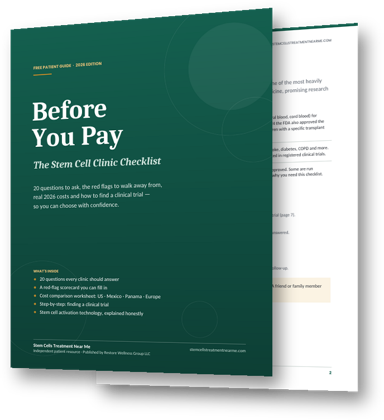
Before You Pay: The Stem Cell Clinic Checklist
- 20 questions every legitimate clinic should answer in writing
- A red-flag scorecard to spot unregulated marketing
- Realistic 2026 cost ranges: US, Mexico, Panama & Europe
- How to find a registered clinical trial
Keep reading
- What Is Stem Cell Therapy? A Plain-Language Guide for Patients
- How Much Does Stem Cell Therapy Cost in 2026?
- How to Find a Legitimate Stem Cell Clinic Near You
- More conditions being treated with stem cells
- Latest stem cell research and clinical trials
Medical Disclaimer: This article is for informational purposes only and does not constitute medical advice. Always consult a qualified medical professional before pursuing any treatment. See our full Medical Disclaimer.
Exploring your stem cell options? Use our free Clinic Finder to learn how to find and vet a legitimate stem cell clinic near you.