What the NIH’s Review of Embryonic Stem Cell Research Means for Patients Like You
If you’ve been following stem cell therapy news, you may have heard that the National Institutes of Health (NIH) — the United States’ largest funder of medical research — has launched a review of embryonic stem cell research programs. For scientists, this has raised serious concerns. But if you’re a patient aged 40, 50, 60, or beyond, quietly hoping that stem cell therapy might one day ease your arthritis, slow your neurological decline, or help you reclaim your quality of life, you’re probably asking a simpler question: What does this mean for me? Let’s walk through it together, in plain language.
A Quick Refresher: What Are Embryonic Stem Cells?
Stem cells are often described as the body’s “master cells” — raw, flexible cells that can develop into many different types of tissue. There are several types of stem cells used or studied in medicine today, and it helps to understand the difference between them.
Embryonic Stem Cells vs. Adult Stem Cells
Embryonic stem cells (ESCs) come from human embryos that are just a few days old, typically those donated from fertility clinics. These cells are highly versatile — scientists call them “pluripotent,” meaning they can theoretically become almost any cell type in the body. That makes them enormously valuable for research into diseases like Parkinson’s, diabetes, and spinal cord injury.
Adult stem cells, on the other hand, are found in tissues throughout your body — in your bone marrow, fat tissue, and blood, among other places. These are the cells most commonly used in the stem cell treatments currently available at clinics today. They are generally considered ethically non-controversial, and many treatments using them are already in practice.
The NIH review, as reported by The Scientist, specifically targets the embryonic category — and that distinction matters greatly when we talk about what’s available to patients right now.
Why Are Scientists Alarmed by This Review?
According to reporting from The Scientist (the-scientist.com), the NIH’s review of its embryonic stem cell research programs has sent ripples of concern through the scientific community. Researchers worry that funding cuts or policy restrictions could slow down decades of foundational science — work that has been critical to understanding how human cells develop, age, and malfunction in disease.
The Bigger Picture: Research Pipelines Take Time
Here’s something important to understand: the treatments available at clinics today didn’t appear overnight. They emerged from years — sometimes decades — of basic laboratory research. When foundational studies are disrupted or defunded, the long-term consequence is fewer treatment options down the road for future patients. Scientists fear that restricting embryonic stem cell research now could quietly close doors that haven’t even been opened yet.
For patients who are counting on next-generation therapies — say, for Alzheimer’s disease, multiple sclerosis, or heart failure — this matters enormously, even if those treatments are still five or ten years away.
What This Does NOT Mean for Your Current Treatment Options
Here’s the reassuring part, and it’s important. The NIH review does not affect the adult stem cell treatments that are widely available and being offered at reputable clinics across the United States today. Treatments using your own stem cells — drawn from your bone marrow or adipose (fat) tissue — are not derived from embryos and are not subject to the same policy debates.
Treatments That Remain Available Right Now
If you’re currently exploring stem cell therapy for conditions like:
- Osteoarthritis of the knee, hip, or shoulder
- Chronic back or joint pain
- Autoimmune conditions
- Post-injury recovery and tissue repair
- Age-related degeneration
…then the treatments you’re likely considering rely on mesenchymal stem cells (MSCs) or platelet-rich plasma (PRP), often drawn from your own body or from ethically sourced donor tissue like umbilical cord blood. These therapies continue to be offered and are unaffected by the embryonic research review.
Why Policy Changes in Research Funding Still Matter to You as a Patient
Even if today’s available treatments aren’t directly impacted, it’s worth understanding that science is a pipeline. The basic research happening in NIH-funded labs today informs the clinical treatments of tomorrow. Embryonic stem cell research has historically helped scientists understand how cells differentiate, repair, and respond to injury — knowledge that benefits the development of all types of stem cell therapies, including adult cell treatments.
Staying Informed Is Part of Good Patient Advocacy
As a patient, you have every right to ask your clinic: Where do the stem cells used in my treatment come from? Are they ethically sourced? What research backs up this therapy? Reputable clinics will answer these questions clearly and willingly. If a clinic is vague or evasive, that’s a red flag worth taking seriously.
What Should You Do With This Information?
The honest answer is: stay curious, stay informed, and don’t let policy headlines derail your personal health journey. The NIH review is a story about research funding and scientific priorities — it is not a signal that stem cell therapy as a whole is unsafe, ineffective, or going away.
What it does remind us is how important it is to work with clinics that are rooted in science, transparent about their methods, and committed to using therapies backed by credible evidence. The field of regenerative medicine is genuinely exciting, and for millions of patients, it is already delivering real results in quality of life and pain management.
As reported by The Scientist (the-scientist.com), scientists themselves remain deeply committed to stem cell research — the alarm raised by the NIH review is, in many ways, a testament to how much they believe in its potential. That passion ultimately serves you, the patient.
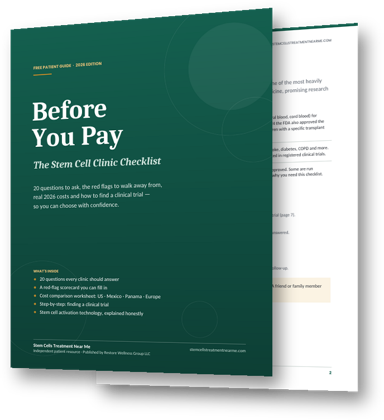
Before You Pay: The Stem Cell Clinic Checklist
- 20 questions every legitimate clinic should answer in writing
- A red-flag scorecard to spot unregulated marketing
- Realistic 2026 cost ranges: US, Mexico, Panama & Europe
- How to find a registered clinical trial
Keep reading
- What Is Stem Cell Therapy? A Plain-Language Guide for Patients
- How Much Does Stem Cell Therapy Cost in 2026?
- How to Find a Legitimate Stem Cell Clinic Near You
- Latest stem cell research and clinical trials
Medical Disclaimer: This article is for informational purposes only and does not constitute medical advice. Always consult a qualified medical professional before pursuing any treatment. See our full Medical Disclaimer.
Exploring your stem cell options? Use our free Clinic Finder to learn how to find and vet a legitimate stem cell clinic near you.