Imagine waiting years for a stem cell transplant that could save your life — only to find out there simply isn’t a matching donor in the registry. For thousands of Americans living with sickle cell disease, that painful reality is all too familiar. But a new awareness push led by two familiar faces from the world of basketball is working to change that, and the impact on real patients could be profound.
The Boozer Brothers Step Up for Sickle Cell Disease
Former NBA star Carlos Boozer and his brother Carmani Boozer have partnered with the National Marrow Donor Program (NMDP) — the organization behind the Be The Match registry — to help recruit more stem cell donors across the United States. Their goal is straightforward but deeply personal: expand the pool of potential donors so that patients waiting for a life-saving transplant have a better chance of finding their match.
The Boozer family has a direct connection to sickle cell disease, which gives their advocacy genuine weight. Their campaign is focused on raising awareness, encouraging people to join the donor registry, and — critically — addressing the shortage of donors from Black and African American communities, where sickle cell disease is most prevalent. (Source: Sickle Cell Disease News)
Why the Stem Cell Donor Registry Matters So Much
To understand why this campaign is so important, it helps to understand how stem cell transplants work for sickle cell patients.
What Is a Stem Cell Transplant for Sickle Cell Disease?
Sickle cell disease is a genetic blood disorder that causes red blood cells to form an abnormal, crescent or “sickle” shape. These misshapen cells don’t carry oxygen efficiently and can block blood flow, leading to episodes of severe pain, organ damage, stroke, and life-threatening complications.
A stem cell transplant — also called a bone marrow transplant — is currently the only widely available cure for sickle cell disease. In this procedure, a patient receives healthy stem cells from a donor. These donated cells travel to the bone marrow and begin producing normal, healthy red blood cells, essentially replacing the patient’s faulty blood system over time.
Why Finding a Match Is So Difficult
For a transplant to work safely, the donor’s stem cells must closely match the patient’s immune system markers, called HLA (Human Leukocyte Antigen) types. Think of HLA markers like a biological fingerprint — the closer the match, the lower the risk of serious complications after the transplant.
Here’s the challenge: HLA types are inherited, which means people are most likely to find a close match within their own ethnic or racial community. Since Black and African American individuals are significantly underrepresented in the current NMDP registry, patients with sickle cell disease — who are disproportionately from this community — face a much harder road to finding a compatible donor.
Studies suggest that patients of African descent have roughly a 29% chance of finding an unrelated matched donor, compared to approximately 79% for patients of European descent. That gap is life-or-death for many waiting patients.
What the NMDP Does and How It Helps Patients
The NMDP, the nonprofit organization behind the well-known Be The Match program, maintains the world’s largest registry of potential stem cell donors and cord blood units. When a patient needs a transplant and doesn’t have a matching family member, their medical team searches this registry for an unrelated donor match.
Joining the registry is surprisingly simple. Potential donors between the ages of 18 and 40 can sign up online and receive a cheek swab kit by mail. A quick swab of the inside of the cheek is all it takes to have your HLA type added to the database. If you’re ever identified as a potential match for a patient, you’ll be contacted and can decide at that point whether to move forward with donation.
What This Means for Real Patients Today
For patients aged 40 and older who are living with sickle cell disease — or who have children or grandchildren with the condition — this campaign carries real, practical hope.
More Donors Means More Lives Saved
Every person who joins the registry increases the odds that a waiting patient will find their life-saving match. When high-profile advocates like the Boozer brothers amplify this message to broader audiences, more people sign up, and the registry grows stronger for every patient in the queue.
Stem Cell Therapy Is Evolving Rapidly
Beyond traditional bone marrow transplants, the broader world of stem cell therapy is expanding quickly. Researchers are exploring how stem cells can be used to treat not only blood disorders like sickle cell disease, but also conditions like osteoarthritis, heart disease, neurological disorders, and more. The growing public awareness around stem cell donation is helping to fuel that research and bring new therapies closer to patients who need them.
You Can Help Even If You’re Over 40
While the NMDP actively recruits donors between 18 and 40 (because younger donors tend to produce transplant outcomes with better results), individuals over 40 can still make a meaningful difference by spreading the word to younger family members, friends, and community members — encouraging them to sign up and potentially save a life.
How to Take Action
If you or someone you love has been affected by sickle cell disease, or if you simply want to help patients waiting for a match, here are a few steps you can take right now:
- Visit bethematch.org to learn about joining the donor registry.
- Share information about the NMDP’s campaign within your community, especially among younger adults.
- Talk to a healthcare provider about whether a stem cell transplant could be an option for managing a blood disorder in your family.
- Stay informed about the latest advances in stem cell therapy that may be relevant to conditions you or a loved one is managing.
The Boozer brothers’ partnership with NMDP is a powerful reminder that stem cell science doesn’t only happen in a laboratory — it depends on a community of caring individuals willing to show up and say, “I want to help.” Every new donor added to the registry is a door opened for a patient who desperately needs one.
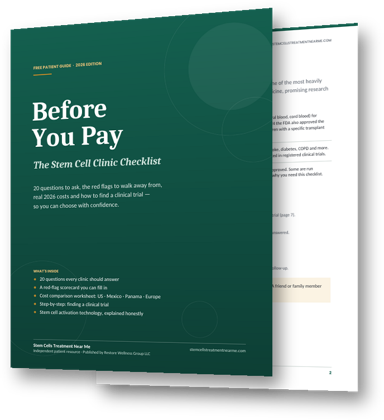
Before You Pay: The Stem Cell Clinic Checklist
- 20 questions every legitimate clinic should answer in writing
- A red-flag scorecard to spot unregulated marketing
- Realistic 2026 cost ranges: US, Mexico, Panama & Europe
- How to find a registered clinical trial
Keep reading
- What Is Stem Cell Therapy? A Plain-Language Guide for Patients
- How Much Does Stem Cell Therapy Cost in 2026?
- How to Find a Legitimate Stem Cell Clinic Near You
Medical Disclaimer: This article is for informational purposes only and does not constitute medical advice. Always consult a qualified medical professional before pursuing any treatment. See our full Medical Disclaimer.
Exploring your stem cell options? Use our free Clinic Finder to learn how to find and vet a legitimate stem cell clinic near you.