If you or someone you love has been diagnosed with large B-cell lymphoma (LBCL) — one of the most common and aggressive forms of blood cancer — you may have heard the term “CAR T-cell therapy” mentioned by your doctor or seen it in your research. This cutting-edge treatment has already changed lives, and new research is helping doctors figure out exactly which patients benefit most from which type of CAR T-cell therapy. That kind of precision could mean better outcomes, fewer side effects, and more hope for thousands of patients.
What Is CAR T-Cell Therapy, and Why Does It Matter?
Let’s start with the basics. CAR T-cell therapy is a form of immunotherapy — a treatment that uses your own immune system to fight cancer. Here’s how it works in plain language:
- Doctors collect T-cells (a type of immune cell) from your blood.
- In a laboratory, those T-cells are genetically modified to grow special “receptors” on their surface. These receptors are called Chimeric Antigen Receptors — that’s where the “CAR” in CAR T comes from.
- The modified cells are multiplied into the millions and then infused back into your body.
- Once inside, these supercharged T-cells are now programmed to recognize and destroy cancer cells.
Think of it like giving your immune system a new GPS — one that’s specifically programmed to navigate directly to the cancer and attack it.
Large B-Cell Lymphoma: Not One-Size-Fits-All
Large B-cell lymphoma is actually an umbrella term for several related but distinct subtypes of blood cancer. While they share some common traits, they can behave very differently from patient to patient. Some respond well to standard chemotherapy; others are more stubborn and require more advanced approaches like CAR T-cell therapy.
This is where new research published and covered by CancerNetwork becomes so important. Researchers are actively working to identify which specific CAR T-cell therapies work best across different subgroups of large B-cell lymphoma patients. This level of detail — matching the right therapy to the right patient — is the future of cancer care.
Why Matching the Right Therapy to the Right Patient Is So Important
Different Subtypes, Different Needs
Not every CAR T-cell product is identical. Currently, several FDA-approved CAR T-cell therapies exist for blood cancers, including options like axicabtagene ciloleucel (Yescarta), tisagenlecleucel (Kymriah), and lisocabtagene maraleucel (Breyanzi). Each works somewhat differently and may be better suited to specific patient populations or disease subtypes.
Researchers studying large B-cell lymphoma are now examining factors like:
- The specific subtype of LBCL a patient has
- Whether the cancer has relapsed (come back) after previous treatment
- The patient’s overall health and age
- Biological markers within the cancer cells themselves
By studying these factors together, scientists can better predict which CAR T-cell product is most likely to produce a strong, lasting response — and which patients may need additional support alongside treatment.
Earlier Use Is Showing Promise
Historically, CAR T-cell therapy was reserved for patients whose cancer had returned after two or more rounds of chemotherapy. But growing evidence suggests that using it earlier — even as a second-line treatment — may improve outcomes significantly for certain groups. This is a meaningful shift that could spare patients from going through additional rounds of toxic chemotherapy before accessing a therapy that might work better for them.
What This Research Means for Patients Today
If you or a loved one is currently navigating a diagnosis of large B-cell lymphoma, here is what this evolving science means in practical terms:
More Personalized Treatment Plans
Your oncologist may now have more guidance than ever before when recommending a specific CAR T-cell product. Rather than a trial-and-error approach, the goal is to match treatment to your unique disease profile from the start.
Better Conversations With Your Doctor
Armed with this kind of research, patients and caregivers can ask more informed questions during appointments. For example: “Am I a candidate for CAR T-cell therapy now, rather than waiting?” or “Which specific CAR T product might be best suited to my subtype?”
Access to Clinical Trials
Many of the most exciting developments in CAR T-cell therapy are happening right now inside clinical trials. Depending on your diagnosis, you may be eligible to access newer treatments — sometimes at no cost — through a trial near you. Ask your care team whether a trial might be appropriate for your situation.
Is CAR T-Cell Therapy Related to Stem Cell Therapy?
This is a question many patients ask, and it’s a fair one. CAR T-cell therapy and stem cell transplantation are both advanced cell-based therapies, and they are sometimes used in combination or discussed alongside one another. Stem cell transplants — particularly autologous transplants, where your own stem cells are collected and reinfused after high-dose chemotherapy — have long been a treatment option for lymphoma. CAR T-cell therapy represents a newer and increasingly important companion approach in the oncology toolkit.
Understanding how these therapies relate to each other can help you have a fuller, more productive conversation with your medical team about the best overall strategy for your care.
Next Steps for Patients and Families
If you are between the ages of 40 and 75 and are navigating large B-cell lymphoma — whether newly diagnosed or dealing with relapsed disease — here are a few steps worth considering:
- Seek a second opinion at a major cancer center with experience in CAR T-cell therapy.
- Ask about clinical trials that may be enrolling patients with your specific subtype.
- Research your subtype so you can have more informed conversations with your care team.
- Explore specialized clinics that offer advanced cell-based therapies, including CAR T and stem cell options.
The science of treating large B-cell lymphoma is moving quickly, and patients who stay informed and advocate for themselves are often the ones who access the most beneficial care. You deserve a treatment plan as individual as you are.
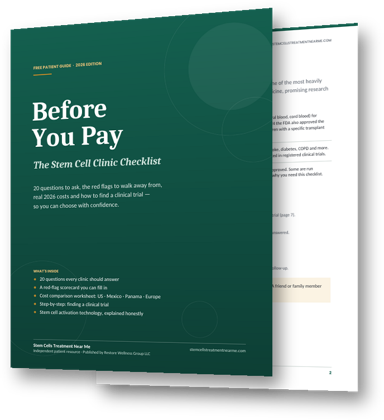
Before You Pay: The Stem Cell Clinic Checklist
- 20 questions every legitimate clinic should answer in writing
- A red-flag scorecard to spot unregulated marketing
- Realistic 2026 cost ranges: US, Mexico, Panama & Europe
- How to find a registered clinical trial
Keep reading
- What Is Stem Cell Therapy? A Plain-Language Guide for Patients
- How Much Does Stem Cell Therapy Cost in 2026?
- How to Find a Legitimate Stem Cell Clinic Near You
- More conditions being treated with stem cells
- Latest stem cell research and clinical trials
Medical Disclaimer: This article is for informational purposes only and does not constitute medical advice. Always consult a qualified medical professional before pursuing any treatment. See our full Medical Disclaimer.
Exploring your stem cell options? Use our free Clinic Finder to learn how to find and vet a legitimate stem cell clinic near you.