Imagine if your own immune system held the secret to fighting chronic disease — not through powerful drugs or invasive procedures, but through a rare group of cells your body already produces. New research is pointing in exactly that direction, and for patients living with long-term conditions like autoimmune disorders, diabetes, or chronic inflammation, the findings offer a genuinely exciting reason for hope.
What Are “Stem T Cells” — And Why Do They Matter?
You’ve probably heard of stem cells — the body’s master builders, capable of turning into many different cell types to repair and regenerate tissue. But there’s a specific, much rarer type that researchers are now paying very close attention to: stem-like T cells, sometimes called “stem T cells.”
T cells are a core part of your immune system. Think of them as soldiers that recognize and attack threats — whether those threats are infections, cancer cells, or abnormal tissue. Most T cells are specialized fighters that burn bright and then fade. But stem T cells are different. They can renew themselves and generate fresh waves of immune cells over time, acting more like a long-lasting reserve force than a one-time strike team.
Why Are They Called “Rare”?
Stem T cells make up only a tiny fraction of the T cells circulating in your body at any given time. Because they are so scarce, scientists have historically had difficulty studying them in depth. But advances in laboratory technology are now making it possible to identify, isolate, and even expand these cells — opening the door to potential new therapies.
According to reporting by Technology Networks, boosting these rare stem T cells could become a key strategy in combating chronic diseases — a finding that has significant implications for millions of patients worldwide.
The Link Between Stem T Cells and Chronic Disease
Chronic diseases — conditions that last a year or more and require ongoing medical attention — affect nearly 6 in 10 adults in the United States alone. These include conditions like:
- Rheumatoid arthritis and other autoimmune disorders
- Type 1 and Type 2 diabetes
- Chronic inflammatory conditions
- Certain cancers
- Long-term viral infections
What many of these conditions have in common is a worn-out or misdirected immune system. In some cases, immune cells become “exhausted” — they lose their ability to fight effectively. In others, they mistakenly attack the body’s own healthy tissue.
How Stem T Cells Fit In
Here’s where stem T cells become so important. Because they can self-renew and produce new generations of immune cells, they may hold the key to replenishing an exhausted immune system or rebalancing one that has gone off course. Researchers believe that if we can find safe ways to boost the number or activity of stem T cells in the body, we may be able to reset immune function in patients with chronic illness.
Think of it like this: if your immune system were a fire brigade, most T cells would be the firefighters on the front lines. Stem T cells would be the training academy — constantly producing new, fresh recruits ready to step in when the current team is depleted or overwhelmed.
What This Research Could Mean for Patients
This is early-stage science, and it’s important to be clear about that. Researchers are still working to understand exactly how stem T cells behave, what triggers them to activate, and how they can be safely increased without causing unintended side effects. We are not at the point where a patient can walk into a clinic and ask for a “stem T cell boost” as a proven treatment for a specific chronic disease.
That said, this research matters right now for several important reasons.
1. It Validates the Broader Direction of Cellular Therapy
For years, patients and doctors alike have been exploring how the body’s own cells — rather than external drugs — can be used to heal and regulate disease. This research reinforces that cellular approaches are not just promising in theory; they are increasingly backed by solid scientific investigation.
2. It Expands Our Understanding of Immune Aging
As we get older, our immune systems naturally become less efficient. Stem T cell research may eventually help explain why this happens — and how it could be slowed or reversed. For patients in their 40s, 50s, 60s, and beyond, this line of research could become personally relevant sooner than many expect.
3. It Points Toward Future Combination Therapies
Many experts believe the future of treating chronic disease will involve combinations of approaches — and stem cell therapies are increasingly part of that conversation. Understanding stem T cells could eventually lead to treatments that work alongside existing therapies to make them more effective and longer lasting.
Stem Cell Therapy Today: What’s Available Right Now
While stem T cell research continues to develop, many patients are already exploring existing forms of stem cell therapy for chronic conditions. These range from mesenchymal stem cell (MSC) treatments — which use stem cells known for their anti-inflammatory properties — to regenerative infusions aimed at supporting joint health, reducing chronic pain, and improving overall immune function.
If you’re living with a chronic condition and wondering whether any form of stem cell therapy might be appropriate for you, the most important first step is to speak with a qualified medical professional who specializes in regenerative medicine. Not every clinic or treatment is equal, and having a knowledgeable guide is essential.
Questions Worth Asking a Specialist
- Is there a stem cell therapy currently available that may address my specific condition?
- What does the evidence say about safety and effectiveness for patients like me?
- How does this treatment interact with my current medications or care plan?
- What should I realistically expect, and over what time frame?
A Reason for Thoughtful Optimism
Research into stem T cells is a reminder that regenerative medicine is a fast-moving field — one where today’s laboratory discovery can become tomorrow’s clinical breakthrough. For patients who have struggled with chronic illness and felt that conventional treatments only manage symptoms without addressing root causes, this kind of science offers a meaningful reason to stay informed and stay engaged with your healthcare team.
Progress takes time, but it is happening. And the more patients understand about their options — both today and on the horizon — the better equipped they are to make thoughtful, empowered decisions about their own health.
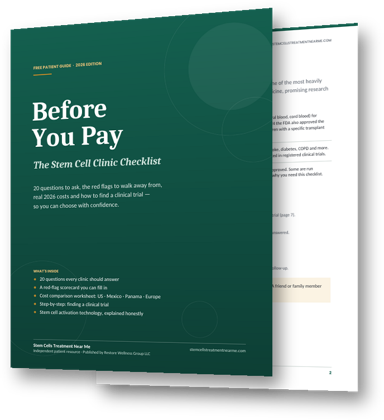
Before You Pay: The Stem Cell Clinic Checklist
- 20 questions every legitimate clinic should answer in writing
- A red-flag scorecard to spot unregulated marketing
- Realistic 2026 cost ranges: US, Mexico, Panama & Europe
- How to find a registered clinical trial
Keep reading
- What Is Stem Cell Therapy? A Plain-Language Guide for Patients
- How Much Does Stem Cell Therapy Cost in 2026?
- How to Find a Legitimate Stem Cell Clinic Near You
- More conditions being treated with stem cells
Medical Disclaimer: This article is for informational purposes only and does not constitute medical advice. Always consult a qualified medical professional before pursuing any treatment. See our full Medical Disclaimer.
Exploring your stem cell options? Use our free Clinic Finder to learn how to find and vet a legitimate stem cell clinic near you.