Imagine a future where stem cell therapies are not only more effective but also more precisely tailored to treat your specific condition — almost like a biological program written just for you. That future may be closer than you think. A new partnership between two pioneering biotech companies, Syntax Bio and Applied StemCell, is working to make programmable stem cell therapies a reality. If you are between 40 and 75 and have been following the world of regenerative medicine, this is news worth understanding.
What Is This Partnership All About?
Syntax Bio and Applied StemCell have announced a collaboration aimed at advancing the development of programmable iPSC therapies. According to Manufacturing Chemist, the two companies are combining their expertise to push the boundaries of what stem cell therapy can achieve. This is an exciting development in regenerative medicine, and understanding it could help you make more informed decisions about your own health journey.
Breaking Down the Key Terms
Let’s start with the basics, because these terms matter:
- iPSC (Induced Pluripotent Stem Cells): These are adult cells — often taken from skin or blood — that have been reprogrammed in a laboratory to behave like embryonic stem cells. This means they have the potential to become almost any type of cell in the body, from heart muscle cells to nerve cells.
- Programmable Therapy: Think of this as adding a layer of precision to stem cell treatment. Instead of simply introducing stem cells and hoping they do the right thing, programmable therapies use genetic tools to give those cells specific instructions — telling them exactly what to do once they are inside the body.
Why This Collaboration Matters
Both Syntax Bio and Applied StemCell bring complementary strengths to this partnership. Applied StemCell has deep experience in generating high-quality iPSC lines and gene editing, while Syntax Bio specializes in advanced genetic programming tools that can guide how cells behave. Together, they aim to overcome some of the biggest hurdles that have slowed stem cell therapies from reaching patients.
The Challenge With Current Stem Cell Therapies
One of the ongoing challenges in stem cell medicine is consistency and control. When stem cells are introduced into the body, there has always been some uncertainty about how they will behave. Will they go to the right place? Will they do what we need them to do? These are real concerns that researchers and clinicians have been working to solve for years.
Programmable iPSC therapy directly addresses this challenge. By essentially writing instructions into the cells before they are used, scientists can increase the likelihood that the cells behave as intended — making therapies potentially safer and more effective.
What Conditions Could This Affect?
While the partnership announcement does not target one specific disease, the platform being developed has wide-ranging implications. iPSC-based therapies are being explored for conditions that are common among people in the 40 to 75 age range, including:
- Degenerative joint diseases such as osteoarthritis
- Neurological conditions like Parkinson’s disease
- Heart disease and heart failure
- Age-related vision loss
- Type 1 and Type 2 diabetes complications
A more controllable and programmable stem cell platform could eventually lead to breakthroughs in treating any of these conditions.
What Does This Mean for Patients Today?
It is important to be honest with you: this partnership is at the research and development stage. The therapies being worked on are not yet available to the general public. However, that does not mean this news is irrelevant to your health decisions right now. Here is why it matters:
The Field Is Moving Faster Than Ever
Collaborations like this one signal that the stem cell industry is maturing. Companies are investing serious resources into making therapies more precise, more scalable, and ultimately more accessible. What begins in a laboratory today can translate into clinic-available treatments within years, not decades.
It Validates iPSC as a Serious Therapeutic Approach
When established companies in the biotech space form strategic partnerships specifically around iPSC technology, it lends credibility to the broader field. For patients who may be skeptical about stem cell therapy or unsure whether it represents real science, news like this is reassuring. Major players are staking their reputations — and their resources — on this technology.
Understanding the Landscape Helps You Ask Better Questions
If you are currently exploring stem cell therapy options or planning to consult with a clinic, understanding the difference between iPSC-based therapies (still mostly in development) and the therapies available today — such as those using mesenchymal stem cells (MSCs) derived from bone marrow, fat tissue, or umbilical cord tissue — helps you have more informed conversations with your medical team. Not all stem cell therapies are the same, and knowing the distinctions empowers you as a patient.
Looking Ahead: Hope Grounded in Science
The partnership between Syntax Bio and Applied StemCell is a meaningful step forward for regenerative medicine. It represents the kind of careful, methodical scientific progress that patients deserve — innovation driven not by hype, but by a genuine commitment to solving real medical problems.
For patients who are managing chronic pain, degenerative conditions, or other age-related health challenges, the advancement of programmable iPSC therapy offers genuine, science-backed hope. While today’s available stem cell treatments may differ from what this partnership is developing, the overall momentum in the field is encouraging.
Stay informed, ask questions, and work with qualified medical professionals who can help you navigate the options that exist right now — while keeping an eye on the innovations that are coming.
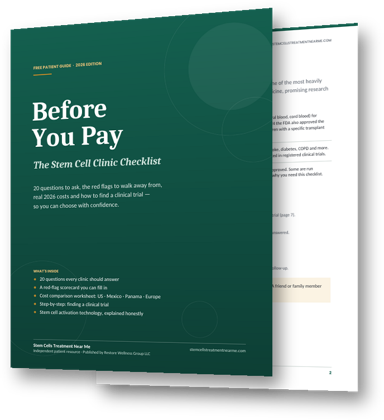
Before You Pay: The Stem Cell Clinic Checklist
- 20 questions every legitimate clinic should answer in writing
- A red-flag scorecard to spot unregulated marketing
- Realistic 2026 cost ranges: US, Mexico, Panama & Europe
- How to find a registered clinical trial
Keep reading
- What Is Stem Cell Therapy? A Plain-Language Guide for Patients
- How Much Does Stem Cell Therapy Cost in 2026?
- How to Find a Legitimate Stem Cell Clinic Near You
Medical Disclaimer: This article is for informational purposes only and does not constitute medical advice. Always consult a qualified medical professional before pursuing any treatment. See our full Medical Disclaimer.
Exploring your stem cell options? Use our free Clinic Finder to learn how to find and vet a legitimate stem cell clinic near you.