
If you’ve noticed that no matter how carefully you eat or how often you exercise, your waistline keeps expanding as the years go by — you are not imagining things. Belly fat in middle age and beyond is one of the most frustrating and common health challenges adults face. But exciting new research is finally shedding light on why this happens at a biological level, and what it could mean for your health and your future treatment options.
What Did Scientists Actually Discover?
Researchers have identified specific biological triggers that cause fat to accumulate around the belly as we age. According to a report published by ScienceDaily, scientists have pinpointed cellular and molecular changes that essentially “tell” the body to store more fat in the abdominal region over time — regardless of diet or activity level.
This is a significant breakthrough. For decades, doctors and patients alike assumed that belly fat was primarily a lifestyle problem — too many calories, too little movement. While those factors certainly matter, this new research suggests the story is much more complicated, and that aging itself is a powerful driver of where and how our bodies store fat.
The Role of Aging Cells
At the heart of this discovery are changes happening inside your fat tissue at the cellular level. As we age, certain cells in our body enter a state called senescence — think of it as cells that have stopped working properly but haven’t been cleared away. These “senescent” cells release signals that promote inflammation and disrupt normal fat regulation. The result? Fat increasingly migrates to the abdomen, where it can be especially harmful to your long-term health.
This type of belly fat — known as visceral fat — is particularly concerning because it wraps around internal organs like the liver, pancreas, and intestines. Unlike the fat just under your skin, visceral fat is metabolically active in ways that can raise your risk of heart disease, type 2 diabetes, and other serious conditions.
Why This Matters More After 40
If you’re between the ages of 40 and 75, this research speaks directly to your experience. Many patients in this age group describe doing “everything right” and still seeing their belly grow. Understanding that there is a biological mechanism driving this change — not a personal failure — is both validating and important.
Hormonal Changes Play a Role Too
The research also connects to what we already know about hormonal shifts during midlife. In women, the drop in estrogen during perimenopause and menopause encourages fat to redistribute toward the abdomen. In men, declining testosterone levels have a similar effect. When you layer these hormonal changes on top of the newly discovered cellular triggers, you start to understand why belly fat can feel so stubborn and relentless after a certain age.
Inflammation: The Hidden Link
One of the most important takeaways from this research is the connection between chronic low-grade inflammation and belly fat accumulation. The aging process naturally increases inflammation in the body — a phenomenon sometimes called “inflammaging.” This persistent inflammation not only encourages fat storage in the abdominal area but also makes it harder for the body to break that fat down. It’s a frustrating cycle that many older adults find themselves caught in.
What Could This Mean for Treatment?
This is where things get genuinely hopeful. Understanding the biological triggers of age-related belly fat opens new doors for treatment approaches that go beyond diet and exercise advice.
Stem Cell Therapy and Fat Regulation
One area gaining increasing attention is the potential role of stem cell therapy in addressing the underlying cellular dysfunction that drives age-related fat accumulation. Stem cells have a remarkable ability to reduce inflammation, support tissue repair, and potentially help reset the cellular environment that drives visceral fat storage.
While stem cell therapy specifically targeting belly fat is still an emerging area of research, scientists are actively exploring how stem cell-based treatments might address the senescent cell burden and inflammatory signals that the new research has highlighted. Early studies suggest that reducing this cellular “noise” could help restore more normal fat metabolism in aging tissues.
It’s important to note that stem cell therapies are not a quick fix or a guaranteed solution for weight management. However, for patients dealing with metabolic issues, chronic inflammation, and the kinds of cellular aging changes described in this research, regenerative approaches may one day become an important part of a broader wellness strategy.
What Can You Do Right Now?
While the science continues to evolve, there are practical steps you can take today that align with what researchers are learning about age-related belly fat.
Focus on Reducing Inflammation
An anti-inflammatory diet rich in colorful vegetables, healthy fats like olive oil, and lean proteins can help counteract some of the inflammatory signaling that drives visceral fat. Foods like blueberries, leafy greens, walnuts, and fatty fish are excellent starting points.
Prioritize Strength Training
Muscle tissue helps regulate metabolism and can offset some of the hormonal and cellular changes that encourage fat storage. Even two to three sessions of resistance exercise per week can make a meaningful difference.
Talk to Your Doctor About Metabolic Health
If belly fat is a concern for you, ask your healthcare provider about metabolic testing, hormone panels, and whether regenerative medicine approaches might be appropriate for your situation. Being proactive and informed puts you in the best position to make decisions that are right for your body.
The Bigger Picture
The discovery of specific biological triggers for age-related belly fat is a reminder that aging is not simply a matter of lifestyle choices gone wrong. Our bodies change at the cellular level in ways that have real, visible consequences — including where we carry weight. The good news is that science is catching up, and new treatment pathways are on the horizon. Staying informed and working closely with qualified medical professionals gives you the best chance of staying ahead of these changes.
Source: ScienceDaily — “Scientists discover what triggers belly fat as we age.”
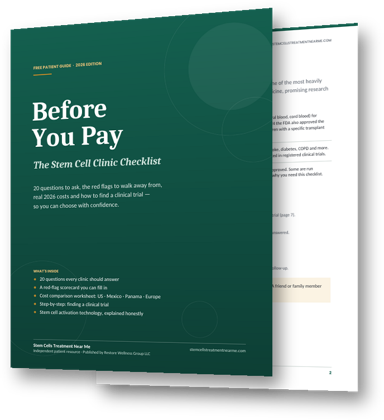
Before You Pay: The Stem Cell Clinic Checklist
- 20 questions every legitimate clinic should answer in writing
- A red-flag scorecard to spot unregulated marketing
- Realistic 2026 cost ranges: US, Mexico, Panama & Europe
- How to find a registered clinical trial
Keep reading
- What Is Stem Cell Therapy? A Plain-Language Guide for Patients
- How Much Does Stem Cell Therapy Cost in 2026?
- How to Find a Legitimate Stem Cell Clinic Near You
Medical Disclaimer: This article is for informational purposes only and does not constitute medical advice. Always consult a qualified medical professional before pursuing any treatment. See our full Medical Disclaimer.
Exploring your stem cell options? Use our free Clinic Finder to learn how to find and vet a legitimate stem cell clinic near you.