If you or someone you love has been living with inflammatory bowel disease — whether that’s Crohn’s disease or ulcerative colitis — you already know how exhausting the search for lasting relief can be. Medications that work for a while and then stop. Flare-ups that disrupt everyday life. A feeling that conventional treatments just aren’t enough. New research published in Nature is offering a genuine reason for hope: scientists are making remarkable strides in engineering immune cell therapies — including stem cell-based approaches and cutting-edge CAR T cell techniques — that could change the way IBD is treated forever. (Nature)
Understanding Inflammatory Bowel Disease: A Quick Refresher
Inflammatory bowel disease is an umbrella term for chronic conditions in which the immune system mistakenly attacks the digestive tract, causing inflammation, pain, diarrhea, and sometimes serious complications. It affects millions of Americans, many of them in their middle and later years. Standard treatments — including anti-inflammatory drugs, steroids, and biologics — can help manage symptoms, but they rarely offer a permanent solution and often come with side effects that accumulate over time.
The root problem with IBD is an immune system that is out of balance. That’s exactly why researchers are now looking to immune cell engineering — including therapies that start with stem cells — as a way to correct that imbalance at its source.
What Does “Engineering Immune Cell Therapies” Actually Mean?
You may have heard the term “stem cell therapy” before, but the approach described in this Nature research takes things several steps further. Scientists are not just transplanting stem cells — they are actively engineering immune cells to behave in specific, targeted ways inside the body.
Starting With Stem Cells
Stem cells are the body’s master builders. They have the unique ability to develop into many different types of specialized cells, including the immune cells that govern inflammation. In the context of IBD research, scientists are using stem cells as a starting point — a kind of biological raw material — that can be guided to become the exact type of immune cell needed to calm intestinal inflammation without suppressing the entire immune system.
This is an important distinction. Traditional immunosuppressive drugs work by broadly dampening immune activity, which can leave patients vulnerable to infections and other complications. Engineered stem cell-derived therapies aim to be far more precise.
The Role of CAR T Cell Technology
CAR T cell therapy — which stands for Chimeric Antigen Receptor T cell therapy — is a technology most people have heard about in the context of cancer treatment. But the Nature research highlights how scientists are now adapting this powerful tool for autoimmune conditions like IBD.
Here’s how it works in simple terms: T cells are a type of immune cell that your body uses to fight threats. In CAR T therapy, these cells are taken from a patient (or a donor), genetically modified in a laboratory to recognize and target a very specific problem — in this case, the inflammatory process causing bowel damage — and then reintroduced into the body. Think of it as giving your immune cells a more accurate instruction manual.
When combined with stem cell technology, researchers can potentially create a renewable, reliable source of these engineered immune cells, which is one of the major logistical challenges the field has been working to overcome.
Why This Research Matters for Patients Right Now
It’s natural to wonder: “This sounds promising, but does it mean anything for me today?” That’s a fair and important question.
We Are Closer Than You Might Think
The Nature review signals that the field has moved beyond early theoretical stages. Researchers are now working through structured development pipelines — meaning therapies are being designed, tested in laboratory models, and in some cases advancing toward clinical trials. While these treatments are not yet available as standard care, the pace of progress is accelerating.
For patients who have tried multiple medications without lasting success, or who are facing difficult decisions about surgery, this research represents a meaningful shift in what may be possible within the next several years.
Precision Over Suppression
One of the most encouraging aspects of this new direction is its emphasis on precision. Rather than quieting the entire immune system — which is what many current IBD treatments do — engineered cell therapies aim to correct only the specific malfunction driving inflammation in the gut. This could mean fewer side effects and a better quality of life during and after treatment.
Potential for Long-Term Remission
Perhaps most exciting is the possibility that these therapies could offer long-term or even permanent remission for some patients. Unlike medications that need to be taken indefinitely, a successfully engineered immune cell therapy could, in theory, reprogram the immune system’s behavior in a lasting way. Researchers are still working to confirm this potential in human clinical settings, but early indicators are genuinely encouraging.
What Should Patients Do With This Information?
If you are currently managing IBD, the most important step is to stay informed and maintain an open, ongoing conversation with your healthcare team. Ask your gastroenterologist about emerging cell-based therapies and whether any clinical trials in your area might be appropriate for your situation.
It’s also worth exploring whether stem cell therapy clinics in your area are working on immune-related conditions. While CAR T cell therapies for IBD remain in development, some clinics are already offering stem cell-based approaches that focus on immune modulation and reducing chronic inflammation.
Questions to Ask Your Doctor
- Are there any clinical trials for cell-based IBD therapies that I might qualify for?
- How does my current treatment compare to what’s emerging in immune cell engineering?
- Could stem cell therapy be appropriate given my specific diagnosis and health history?
- What institutions near me are researching or offering advanced cell therapies?
A Hopeful Horizon
Living with IBD can feel isolating and discouraging — especially when treatments fall short. But the science published in Nature is a powerful reminder that researchers around the world are working tirelessly to find better answers. From stem cell-derived therapies to precision-engineered CAR T cells, the future of IBD treatment looks meaningfully different from where things stand today. For patients who have been waiting for a real breakthrough, that future may not be as far away as it once seemed.
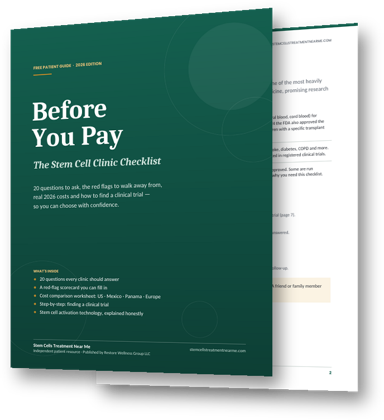
Before You Pay: The Stem Cell Clinic Checklist
- 20 questions every legitimate clinic should answer in writing
- A red-flag scorecard to spot unregulated marketing
- Realistic 2026 cost ranges: US, Mexico, Panama & Europe
- How to find a registered clinical trial
Keep reading
- What Is Stem Cell Therapy? A Plain-Language Guide for Patients
- How Much Does Stem Cell Therapy Cost in 2026?
- How to Find a Legitimate Stem Cell Clinic Near You
Medical Disclaimer: This article is for informational purposes only and does not constitute medical advice. Always consult a qualified medical professional before pursuing any treatment. See our full Medical Disclaimer.
Exploring your stem cell options? Use our free Clinic Finder to learn how to find and vet a legitimate stem cell clinic near you.