If you or someone you love has been watching the world of regenerative medicine for signs of real progress, here is a development worth paying attention to. A major pharmaceutical company just made a $140 million bet on a cutting-edge cell therapy technology — one that targets the very root of how our immune system ages and breaks down. That kind of investment does not happen unless serious scientists believe something genuinely promising is on the horizon.
What Just Happened — And Why It Matters
United Therapeutics, a well-established biopharmaceutical company known for developing treatments for rare and serious diseases, has acquired a startup focused on thymic cell therapy for $140 million. The deal was reported by Fierce Biotech, a leading publication covering the biotechnology industry. For patients between the ages of 40 and 75 who are exploring regenerative and cellular medicine options, this news signals that thymic cell therapy is moving from the fringes of research into the mainstream spotlight.
What Is the Thymus — And Why Should You Care?
The thymus is a small gland located in your chest, just behind your breastbone. Most people have never heard of it, but it plays a surprisingly important role in keeping you healthy throughout your life.
The Thymus Is Your Immune System’s Training Ground
Think of the thymus as a school for immune cells. It is where a specific type of white blood cell — called a T-cell — goes to learn how to recognize and fight off threats like infections, viruses, and even cancer cells. Without a properly functioning thymus, your immune system cannot build and maintain a strong, balanced defense.
The Problem: Your Thymus Shrinks as You Age
Here is the catch. Starting in your teenage years, the thymus slowly begins to shrink and lose function — a process doctors call thymic involution. By the time most people reach their 40s, 50s, and beyond, their thymus has lost a significant portion of its ability to produce new, healthy T-cells. This is one reason why older adults tend to be more vulnerable to infections, respond less effectively to vaccines, and face a higher risk of certain cancers and autoimmune conditions.
In short, a declining thymus is one of the biological reasons we become more immunologically vulnerable as we age.
What Is Thymic Cell Therapy?
Thymic cell therapy is an emerging field that aims to restore or replace thymic function using cellular and regenerative medicine techniques. The goal is to give the immune system a kind of “reboot” — helping it produce healthy, functional T-cells again, much like it did when you were younger.
How Does It Work?
While the specific technology of the acquired startup has not been fully disclosed publicly, thymic cell therapies generally work by introducing specially prepared cells — sometimes derived from stem cell sources — that can rebuild thymic tissue or stimulate the thymus to function more effectively. Researchers are exploring approaches including:
- Thymic organoids — lab-grown mini versions of thymic tissue that can be implanted to restore immune function
- Stem cell-derived thymic epithelial cells — cells that form the structural foundation of the thymus and help train T-cells
- Gene and cell combination therapies — approaches that combine cellular engineering with immune restoration
These are still largely in clinical development, but the $140 million acquisition signals that experts in the industry believe these approaches are getting closer to real-world medical use.
What Does This Mean for Patients Today?
It is important to be honest with you: thymic cell therapy is not yet a widely available treatment that you can walk into a clinic and receive tomorrow. Most approaches are still being studied in clinical trials and early research phases. However, there are several important takeaways for patients who are watching this space closely.
Serious Money Means Serious Science
When a company like United Therapeutics commits $140 million to acquire a startup in this space, it means that highly credentialed scientists, regulatory experts, and medical professionals believe the underlying science is sound and the path to clinical use is realistic. This is not fringe medicine — this is mainstream biotech moving into regenerative immunology.
The Broader Stem Cell and Cell Therapy Field Is Accelerating
This acquisition is part of a much larger trend. Across the globe, cell-based therapies — including stem cell treatments — are advancing at a pace we have not seen before. Investments like this one help fund the research, clinical trials, and manufacturing infrastructure that bring these therapies closer to patients like you.
Immune Health Is at the Heart of Aging Well
Whether or not thymic cell therapy becomes widely available in the near term, this news reinforces something many regenerative medicine practitioners already emphasize: immune system health is central to healthy aging. Many of the stem cell therapies already being explored at accredited clinics today focus partly on modulating and supporting immune function, reducing chronic inflammation, and promoting tissue repair — goals that overlap meaningfully with what thymic therapy aims to achieve.
Questions Worth Asking Your Doctor
If this topic resonates with you, here are some thoughtful questions you might bring to your next medical appointment or consultation with a regenerative medicine specialist:
- How is my immune function currently, and how has it changed with age?
- Are there clinical trials in thymic cell therapy or related immune regeneration that I might qualify for?
- Could existing stem cell therapies offer any immune-supporting benefits for my specific health concerns?
- What lifestyle or nutritional strategies can support thymic health in the meantime?
Looking Ahead
The $140 million acquisition of a thymic cell therapy startup by United Therapeutics is more than a business headline. It is a signal that regenerative medicine is entering a new chapter — one where restoring the aging immune system is no longer considered science fiction. For patients in their 40s, 50s, 60s, and beyond, that is genuinely encouraging news. The science is moving, serious resources are being committed, and the future of immune-focused regenerative medicine is looking brighter than it has in years.
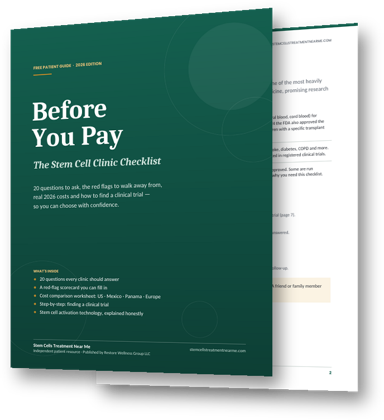
Before You Pay: The Stem Cell Clinic Checklist
- 20 questions every legitimate clinic should answer in writing
- A red-flag scorecard to spot unregulated marketing
- Realistic 2026 cost ranges: US, Mexico, Panama & Europe
- How to find a registered clinical trial
Keep reading
- What Is Stem Cell Therapy? A Plain-Language Guide for Patients
- How Much Does Stem Cell Therapy Cost in 2026?
- How to Find a Legitimate Stem Cell Clinic Near You
- More conditions being treated with stem cells
Medical Disclaimer: This article is for informational purposes only and does not constitute medical advice. Always consult a qualified medical professional before pursuing any treatment. See our full Medical Disclaimer.
Exploring your stem cell options? Use our free Clinic Finder to learn how to find and vet a legitimate stem cell clinic near you.