If you or a loved one has been diagnosed with multiple myeloma, you may already know that stem cell transplantation can be one of the most effective tools in managing this blood cancer. But one question that has long troubled both patients and their care teams is surprisingly simple: Do you really need to stay in the hospital for the whole process? Thanks to a breakthrough use of artificial intelligence, doctors now have a smarter, safer way to answer that question — and it could make your treatment journey significantly more comfortable.
Understanding Multiple Myeloma and Stem Cell Transplantation
Multiple myeloma is a type of cancer that forms in plasma cells, which are white blood cells found in your bone marrow. It most commonly affects people over the age of 60 and can cause bone pain, fatigue, and kidney problems, among other symptoms.
One of the most established treatments for eligible patients is an autologous stem cell transplant — a procedure where doctors collect your own stem cells, use high-dose chemotherapy to destroy the diseased cells in your bone marrow, and then return your healthy stem cells to help rebuild your immune system. While this treatment can be highly effective, the recovery period has traditionally required a lengthy hospital stay, sometimes weeks at a time.
Why the Hospital-vs.-Home Question Matters So Much
Spending weeks in a hospital is not just emotionally taxing — it’s physically draining and can significantly affect a patient’s quality of life. Hospital environments also carry risks, including exposure to infections. For many patients aged 40 to 75, being away from family, familiar surroundings, and daily routines can slow emotional and physical recovery alike.
On the other hand, some patients genuinely need close medical monitoring during this critical phase. Sending someone home too early could put them at serious risk if complications arise. So the challenge has always been: How do doctors know who is safe to recover at home and who truly needs inpatient care?
How AI Is Changing the Way Doctors Make This Decision
According to a report from Medical Xpress, researchers have developed an AI-powered tool that helps oncologists make precisely this determination — safely and individually for each patient.
The AI system analyzes a wide range of patient data, including age, overall health, lab results, and other personal risk factors, to predict which patients are likely to do well recovering at home versus which ones need the safety net of inpatient care. This kind of personalized decision-making was previously left almost entirely to physician experience and intuition — which, while valuable, is inherently variable from one doctor to the next.
What “Tailored Treatment” Really Means for You
Think of it like a custom-fit suit versus one pulled off a rack. Historically, most myeloma patients undergoing stem cell transplants went through a very similar experience regardless of their individual circumstances. With AI-assisted guidance, your care team can now look at your specific profile — your health history, your risk level, your support system at home — and make a much more informed recommendation about where your recovery should take place.
This is a significant step forward in what healthcare professionals call precision medicine — the idea that treatments and care plans should be tailored to the individual, not applied as a one-size-fits-all approach.
What This Means for Patients Right Now
You may be wondering: “Is this available at clinics today, or is it still years away?” The encouraging news is that AI-assisted tools are increasingly being integrated into leading oncology centers. While not every clinic has adopted this technology yet, its use is growing — and it signals an important shift in how stem cell transplant programs are being structured.
Potential Benefits You Could Experience
- More time at home during recovery, surrounded by loved ones in a comfortable environment
- Reduced hospital-acquired infection risk, which is particularly important for patients whose immune systems are temporarily weakened after transplant
- Lower healthcare costs associated with fewer inpatient hospital days
- Greater peace of mind knowing that the decision to recover at home was made using robust, data-driven analysis — not guesswork
- Personalized monitoring plans that may include regular check-ins or outpatient visits for those who do go home
Are There Any Risks to Home-Based Recovery?
It’s important to be honest: home care isn’t the right fit for every patient. Some individuals — particularly those with limited support at home, unstable health conditions, or higher predicted risk of complications — will still need and benefit from inpatient monitoring. The AI tool is designed to identify these patients just as clearly as it identifies those who are good candidates for home recovery. The goal is always safety first, comfort second.
Questions to Ask Your Care Team
If you or a family member is preparing for a stem cell transplant for multiple myeloma, consider bringing these questions to your next appointment:
- Does your center use AI or data-driven tools to guide transplant care decisions?
- Am I a candidate for outpatient or home-based recovery?
- What criteria would make me eligible — or ineligible — for at-home recovery?
- What monitoring or support would be put in place if I recover at home?
- What warning signs should I watch for that would require me to return to the hospital?
The Bigger Picture: A Smarter, More Human Approach to Stem Cell Care
This development is part of a broader and deeply encouraging trend: using technology not to replace the human side of medicine, but to make it more thoughtful, more personalized, and more responsive to individual patient needs. For the millions of people living with multiple myeloma — and for the families who support them — this kind of innovation offers something genuinely valuable: hope backed by science.
As AI continues to be integrated into stem cell treatment programs, patients can increasingly expect care plans that reflect who they are as individuals, not just what disease they have. That’s a future worth looking forward to.
Source: Medical Xpress — “Hospital stay or home care? AI helps tailor myeloma stem cell treatment safely”
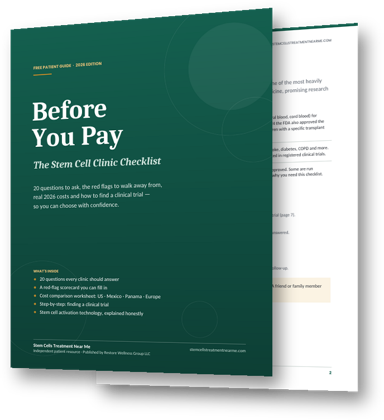
Before You Pay: The Stem Cell Clinic Checklist
- 20 questions every legitimate clinic should answer in writing
- A red-flag scorecard to spot unregulated marketing
- Realistic 2026 cost ranges: US, Mexico, Panama & Europe
- How to find a registered clinical trial
Keep reading
- What Is Stem Cell Therapy? A Plain-Language Guide for Patients
- How Much Does Stem Cell Therapy Cost in 2026?
- How to Find a Legitimate Stem Cell Clinic Near You
- More conditions being treated with stem cells
Medical Disclaimer: This article is for informational purposes only and does not constitute medical advice. Always consult a qualified medical professional before pursuing any treatment. See our full Medical Disclaimer.
Exploring your stem cell options? Use our free Clinic Finder to learn how to find and vet a legitimate stem cell clinic near you.