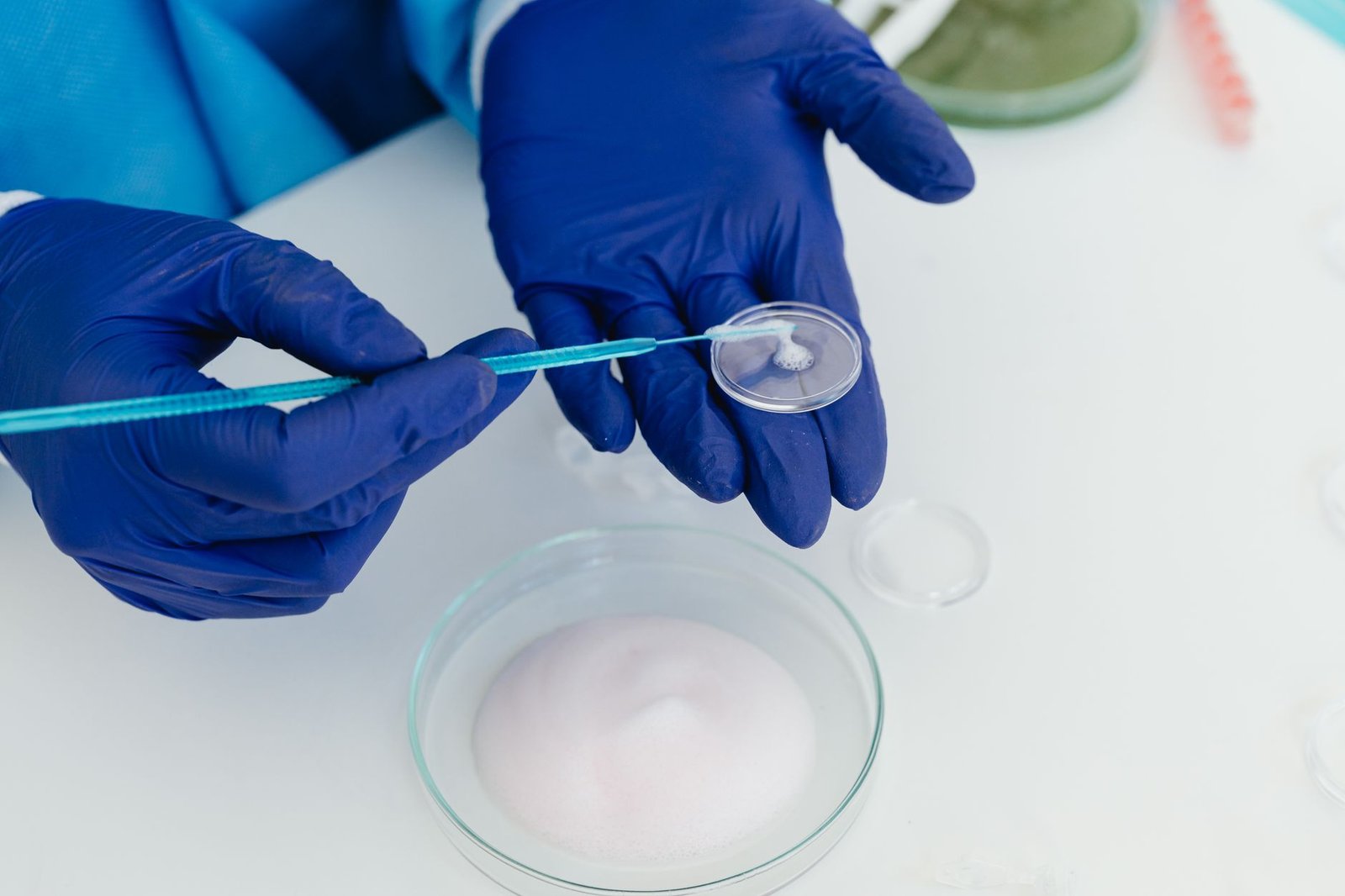
Imagine a cancer treatment that takes your own immune cells, genetically re-engineers them in a laboratory to recognise and attack your specific cancer, then infuses those supercharged cells back into your body. That is CAR-T cell therapy — and it represents one of the most significant advances in cancer treatment in the past two decades. For patients with certain blood cancers who have not responded to chemotherapy or whose cancer has returned after treatment, CAR-T has produced remission rates that were simply not achievable before.
This guide explains how CAR-T therapy works in plain language, who it is approved for, what it costs, and how to explore it as an option.
How CAR-T Cell Therapy Works (Step by Step)
CAR-T stands for Chimeric Antigen Receptor T-cell therapy. The name sounds complex, but the process follows a clear sequence:
Step 1 — Blood Draw and T-Cell Collection
A patient undergoes a procedure called leukapheresis — a blood draw through which T-cells (a type of white blood cell and a core component of your immune system) are separated from the blood and collected. The rest of the blood is returned to the body. This process takes several hours and is performed at a specialist medical centre.
Step 2 — Genetic Engineering in the Laboratory
The collected T-cells are sent to a specialist laboratory where scientists use viral vectors to introduce a new gene into the cells. This gene encodes the chimeric antigen receptor (CAR) — a protein engineered to recognise a specific marker on the surface of cancer cells. Different CAR-T products target different markers. For example, most currently approved therapies target a protein called CD19 found on B-cell lymphomas, or BCMA found on multiple myeloma cells.
Step 3 — Cell Expansion
The re-engineered cells are multiplied in the laboratory over a period of several weeks — growing from a few million into hundreds of millions of CAR-T cells. This expansion phase is technically demanding and is one reason the treatment is expensive and currently available only at specialist centres.
Step 4 — Chemotherapy Preparation
Before the CAR-T cells are infused, the patient receives a short course of lymphodepleting chemotherapy. This clears space in the immune system and suppresses existing immune cells that might interfere with the CAR-T cells after infusion. This preparatory phase typically takes three to five days.
Step 5 — Infusion
The CAR-T cells are infused intravenously — a relatively straightforward process that takes thirty to ninety minutes. This is the culmination of what has usually been a four to six week manufacturing and preparation process.
Step 6 — Monitoring
The weeks following infusion are the most critical. Patients are monitored closely — initially in hospital — for serious but manageable side effects. Many specialist centres require patients to remain within a short distance of the treatment facility for at least four weeks after infusion.
What Cancers Does CAR-T Treat?
CAR-T therapy has received FDA approval for a specific and growing list of blood cancers. As of 2026, approved indications include:
- Diffuse large B-cell lymphoma (DLBCL) — the most common aggressive lymphoma, and the first cancer for which CAR-T was approved
- Follicular lymphoma — a slower-growing B-cell lymphoma
- Mantle cell lymphoma
- Multiple myeloma — a cancer of plasma cells in the bone marrow
- Acute lymphoblastic leukaemia (ALL) — including in patients as young as three years old
- Chronic lymphocytic leukaemia (CLL) — in certain relapsed or refractory cases
Clinical trials are actively investigating CAR-T for solid tumours including glioblastoma (an aggressive brain cancer), lung cancer, pancreatic cancer and ovarian cancer. Progress has been slower with solid tumours because they create a hostile local environment that makes it harder for CAR-T cells to penetrate and survive. This remains an active area of research with significant funding from major cancer institutes worldwide.
CAR-T vs Standard Stem Cell Therapy — What’s the Difference?
Patients sometimes confuse CAR-T with stem cell transplants. Both involve cells, but they work very differently:
| Feature | CAR-T Cell Therapy | Stem Cell Transplant |
|---|---|---|
| Cell type | Re-engineered T-cells (immune cells) | Haematopoietic stem cells (blood-forming) |
| Goal | Directly attack cancer cells | Rebuild healthy blood and immune system |
| Source | Patient’s own T-cells (genetically modified) | Patient or matched donor bone marrow/blood |
| Approved for | Specific blood cancers (relapsed/refractory) | Blood cancers, bone marrow failure, some autoimmune |
| Recovery | Weeks to months | Months to over a year |
| US cost | $400,000–$500,000 | $100,000–$300,000 |
CAR-T Cell Therapy Cost in 2026
CAR-T therapy is among the most expensive medical treatments available anywhere in the world. Understanding the cost landscape is important for patients exploring this option.
US List Price
Approved CAR-T products in the United States carry list prices of approximately $400,000 to $500,000 for the CAR-T cells themselves, before hospital, physician and supportive care costs are added. Total treatment costs at a specialist centre typically run $500,000 to $700,000 or higher when all components are included.
Insurance Coverage
The good news: for FDA-approved indications, coverage has improved substantially. Medicare and most major private insurers now cover CAR-T therapy for approved diagnoses — meaning patients with the right diagnosis who have failed prior treatment lines should be able to access this treatment through their insurance. Prior authorisation is required and the process can take several weeks. Cancer centres that administer CAR-T typically have dedicated financial counsellors who assist with authorisation.
International Access
Germany, the United Kingdom, France and several other European countries have approved CAR-T products and cover them through their national health systems for eligible patients. Israel and Australia have also approved several products. A small number of clinics in Mexico and India offer CAR-T at lower cost, though quality standards vary significantly and these are not regulated to the same standard as FDA or EMA-approved treatments.
Clinical Trials
Patients who qualify for a clinical trial can access CAR-T at no cost for the treatment itself. ClinicalTrials.gov lists all active trials in the United States, including trials for solid tumours that are not yet commercially approved. Your oncologist is the best starting point for determining trial eligibility.
What Are the Risks and Side Effects?
CAR-T therapy produces powerful immune responses, which is the source of both its effectiveness and its most serious risks. All patients are monitored closely during and after infusion, which is why treatment is only available at specialist centres equipped to manage these effects.
Cytokine Release Syndrome (CRS)
The most common serious side effect is cytokine release syndrome — a systemic inflammatory response triggered when the CAR-T cells begin attacking cancer cells and release large quantities of signalling proteins called cytokines. Symptoms range from flu-like (fever, fatigue, muscle aches) to severe (very low blood pressure, difficulty breathing). CRS occurs in the majority of patients to some degree and is managed with tocilizumab, an anti-inflammatory medication. Severe CRS occurs in approximately 20–30% of patients and requires intensive support.
Immune Effector Cell-Associated Neurotoxicity Syndrome (ICANS)
A neurological side effect that causes confusion, difficulty speaking, headache and in severe cases seizures. ICANS typically appears several days after infusion, sometimes after CRS has resolved. It is managed with corticosteroids and resolves in most patients, though severe cases require neurological support.
Long-Term Outcomes
For patients with relapsed or refractory large B-cell lymphoma — the most common CAR-T indication — long-term complete remission rates in clinical trials have been approximately 30–40%. This means that for patients who have failed other therapies, roughly one in three achieve durable remission. Rates vary by specific diagnosis, disease burden and patient factors. Your oncologist will be able to give you outcome data specific to your disease type.
How to Access CAR-T Therapy
Access to CAR-T therapy in the US requires referral to one of the approximately 150 specialist centres that are authorised to administer approved products. These are primarily major cancer centres, academic medical centres and large hospital systems.
The typical pathway is: diagnosis confirmed at a treating oncologist → referral to a CAR-T centre → evaluation for eligibility → insurance authorisation → leukapheresis and manufacturing → treatment. This process takes a minimum of four to six weeks from referral to infusion, and sometimes longer depending on manufacturing slot availability.
For patients interested in clinical trials for non-approved indications — including solid tumours — ClinicalTrials.gov (clinicaltrials.gov) lists all open trials. Filtering by condition and zip code will show trials enrolling near you.
Is CAR-T Right for You?
CAR-T therapy is a highly specialised treatment for a specific group of patients — primarily those with blood cancers that have relapsed after or not responded to standard chemotherapy. It is not a general-purpose stem cell treatment and is not currently available for most non-cancer conditions.
If you or a family member has been diagnosed with a blood cancer and has been told that standard treatment is no longer working, the conversation about CAR-T should happen with your oncologist sooner rather than later. Eligibility criteria, including which prior treatments you have received, matter significantly.
Ask your oncologist directly: “Am I eligible for CAR-T cell therapy? Is there a clinical trial that might be appropriate for me?” These are the right questions — and you deserve a clear, direct answer.
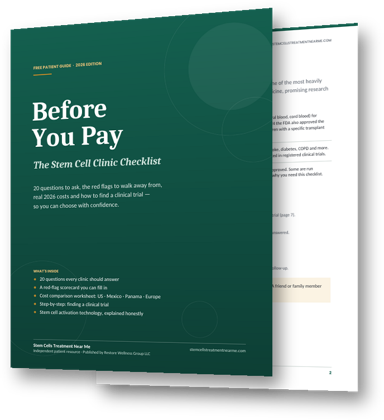
Before You Pay: The Stem Cell Clinic Checklist
- 20 questions every legitimate clinic should answer in writing
- A red-flag scorecard to spot unregulated marketing
- Realistic 2026 cost ranges: US, Mexico, Panama & Europe
- How to find a registered clinical trial
Medical Disclaimer: This article is for informational purposes only and does not constitute medical advice. Always consult a qualified medical professional before pursuing any treatment. See our full Medical Disclaimer.
Exploring your stem cell options? Use our free Clinic Finder to learn how to find and vet a legitimate stem cell clinic near you.