If you or someone you love is waiting for a stem cell transplant, you already know how critical it is to find a matching donor — and how devastating it can be when a donor backs out at the last moment. New research coming out of Asia offers a surprisingly simple solution to this ongoing problem, and it carries real hope for patients across the globe who are counting on donors to follow through.
Why Donor Follow-Through Matters So Much
Stem cell transplants are often a last resort for patients battling blood cancers like leukemia and lymphoma, as well as certain genetic disorders and immune system diseases. Unlike organ donations, stem cell donations require a specific match between donor and recipient — and finding that match can take months or even years.
When a match is finally found, patients and their families breathe a sigh of relief. But here’s the hard truth: a significant number of registered donors withdraw from the process before the donation actually happens. This isn’t just disappointing — it can be medically dangerous. Patients often undergo high-dose chemotherapy or radiation to prepare their bodies for the transplant, destroying their existing immune system in anticipation of receiving new stem cells. If a donor pulls out at that stage, the consequences can be life-threatening.
The Research: A Small Message, A Big Impact
Researchers highlighted in a recent report from Asia Research News found that sending targeted, supportive messages to registered stem cell donors can significantly improve the rate at which those donors follow through with their commitment. (Asia Research News)
The concept sounds almost too simple: communicate with donors regularly, remind them of the importance of their role, and provide encouragement throughout the process. Yet the results of this kind of structured outreach were meaningful. Donors who received consistent messaging were more likely to stay engaged, stay informed, and ultimately show up when the time came.
What Kind of Messages Were Used?
The messages weren’t elaborate. They were straightforward, personal, and emotionally resonant — reminders of why the donor had signed up in the first place, explanations of what the recipient might be going through, and practical information about what to expect next. Think of it as the difference between signing up for a gym membership and never hearing from the gym again versus receiving regular check-ins that keep you motivated and on track.
Why Do Donors Drop Out in the First Place?
Understanding the reasons donors withdraw helps explain why communication matters so much. Common reasons include:
- Fear of the procedure: Many donors don’t fully understand what stem cell donation involves. There are two main methods — a peripheral blood stem cell (PBSC) donation, which is similar to donating blood, and a bone marrow donation, which involves a minor surgical procedure. Fears and misconceptions can grow in the absence of clear information.
- Life changes: Between registration and being called as a match, years may pass. Jobs change, families grow, health concerns arise — and donors may feel less able or willing to participate.
- Feeling disconnected: Without regular contact from a registry or organization, donors may simply forget the gravity of their commitment or feel detached from the process.
Regular, thoughtful messaging addresses all three of these barriers directly.
What This Means for Patients Today
If you or a family member is on a transplant waiting list, this research is genuinely encouraging — even though you may feel like you have little control over whether a donor follows through.
Ask Your Care Team About Donor Communication Programs
Hospitals and transplant centers increasingly work with national and international stem cell registries. If you’re a patient or caregiver, it’s entirely reasonable to ask your medical team what steps are being taken to keep a matched donor engaged. Many registries already have outreach programs in place, and knowing this can bring peace of mind during an anxious waiting period.
Encourage Your Loved Ones to Register — and Stay Connected
If you have friends or family members who are registered stem cell donors — or who are considering registering — share this research with them. Staying in touch with the registry they signed up with, keeping their contact information updated, and responding to any outreach they receive can literally save a life. Encourage them to opt into any communication programs the registry offers.
A Broader Lesson for the Stem Cell Community
This research reinforces something important that applies well beyond donor registries: informed, supported people make better health decisions. Whether you’re a donor, a patient, or a caregiver, having access to timely, compassionate information changes outcomes.
For patients considering stem cell therapy for conditions beyond transplants — including regenerative treatments for joint pain, autoimmune conditions, or age-related concerns — this principle holds just as true. Being well-informed, staying connected with your care team, and asking questions at every stage of the process leads to better experiences and, often, better results.
The Takeaway: Don’t Underestimate the Power of Communication
It may seem remarkable that something as simple as a well-timed message can keep a life-saving donation on track. But human beings respond to connection, to reminders of why something matters, and to feeling seen and supported. The researchers behind this work have given stem cell registries around the world a practical, low-cost tool — and given waiting patients a little more reason to hope.
If stem cell therapy — whether for transplant or regenerative purposes — is something you’re exploring, remember that knowledge and communication are your most powerful allies. Ask questions. Stay engaged. And don’t hesitate to reach out to specialists who can walk you through your options with honesty and care.
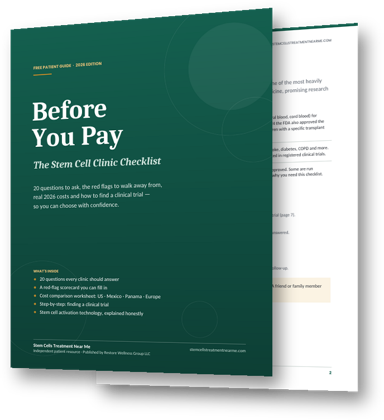
Before You Pay: The Stem Cell Clinic Checklist
- 20 questions every legitimate clinic should answer in writing
- A red-flag scorecard to spot unregulated marketing
- Realistic 2026 cost ranges: US, Mexico, Panama & Europe
- How to find a registered clinical trial
Keep reading
- What Is Stem Cell Therapy? A Plain-Language Guide for Patients
- How Much Does Stem Cell Therapy Cost in 2026?
- How to Find a Legitimate Stem Cell Clinic Near You
Medical Disclaimer: This article is for informational purposes only and does not constitute medical advice. Always consult a qualified medical professional before pursuing any treatment. See our full Medical Disclaimer.
Exploring your stem cell options? Use our free Clinic Finder to learn how to find and vet a legitimate stem cell clinic near you.