If you’ve been watching the stem cell therapy space and wondering when more options might become available closer to home, here’s news worth paying attention to. A company called MuseCell Innovations has officially entered the United States market, with a stated mission of bringing restorative stem cell therapy directly to American patients. For the millions of people between the ages of 40 and 75 who are managing chronic pain, degenerative conditions, or age-related decline, this development could represent a meaningful new chapter in accessible regenerative care.
What Is MuseCell Innovations?
MuseCell Innovations is a stem cell therapy company that has now made its way into the U.S. healthcare landscape. According to a report published by Business Wire, the company is focused on restorative therapies — meaning treatments designed not just to manage symptoms, but to potentially support the body’s own repair processes at a cellular level.
The name “Muse” refers to a specific type of adult stem cell known as Multilineage-differentiating Stress Enduring cells, or Muse cells. These are naturally occurring cells found in the human body — specifically in bone marrow, skin, and fat tissue — that have the ability to differentiate into multiple cell types. In plain terms, this means they may be able to become the kind of cell your body needs most, whether that’s a nerve cell, a heart muscle cell, or a liver cell.
How Are Muse Cells Different From Other Stem Cells?
You may have heard about embryonic stem cells or induced pluripotent stem cells (iPSCs) in the news. Those types often come with ethical concerns or a higher risk of uncontrolled cell growth. Muse cells, by contrast, are adult stem cells with what researchers describe as a self-limiting quality — meaning they tend to stop dividing once the repair work is done. This characteristic is considered an important safety advantage in the field of regenerative medicine.
Another notable feature is that Muse cells appear to have low immunogenicity, which is a scientific way of saying the body is less likely to reject them. This opens up the possibility of using donor-derived cells without the same level of immune-suppressing medications typically required in organ transplants.
What Does This Mean for Patients in the United States?
For a long time, many Americans interested in advanced stem cell therapies have had to travel abroad — to clinics in Mexico, Panama, or Germany — to access treatments not yet widely available domestically. MuseCell Innovations entering the U.S. market signals a potential shift in that reality.
Greater Access, Closer to Home
One of the most significant aspects of this announcement, as covered by Business Wire, is that MuseCell Innovations intends to bring its therapies directly to American patients. That word — directly — matters. It suggests the company is working to reduce the barriers between cutting-edge cell therapy and the everyday person who could benefit from it.
For patients dealing with conditions like stroke recovery, amyotrophic lateral sclerosis (ALS), heart failure, or kidney disease — conditions where traditional medicine often offers limited long-term solutions — the availability of Muse cell-based therapies in the U.S. could be genuinely life-changing.
What Conditions Might Muse Cell Therapy Address?
While it’s important to note that stem cell therapies are still an evolving field and not all treatments are FDA-approved for every condition, Muse cells have been studied in clinical and preclinical settings for a range of serious conditions, including:
- Stroke and brain injury — supporting neurological recovery after an ischemic event
- ALS (Lou Gehrig’s disease) — slowing motor neuron degeneration
- Heart failure — assisting in cardiac tissue repair
- Kidney disease — promoting renal tissue restoration
- Spinal cord injury — encouraging nerve pathway recovery
Research into Muse cells has been led in part by Japanese scientists, and some formulations have already undergone clinical trials in Japan. The entry into the U.S. market represents an effort to bring this science to a broader patient population.
Important Considerations Before You Get Excited
It’s completely natural to feel hopeful when you hear news like this. But as your health advocate, we want to make sure your optimism is grounded in realistic expectations.
Regulatory Status Matters
Not all stem cell therapies offered in the United States are FDA-approved. The FDA regulates cell-based therapies carefully, and patients should always ask whether a treatment has received regulatory clearance or is being offered under an Investigational New Drug (IND) application or through a clinical trial. When speaking with any clinic about Muse cell therapy, ask directly: “What is the regulatory status of this treatment?”
Ask Questions, Take Your Time
Whether you’re considering MuseCell Innovations or any other stem cell provider, here are a few questions worth asking before moving forward:
- Is this treatment part of a clinical trial or already approved for my condition?
- What evidence exists that this therapy works for patients like me?
- What are the potential side effects or risks?
- What is the cost, and is any portion covered by insurance?
- Who are the medical professionals administering the treatment?
Taking time to ask these questions isn’t pessimism — it’s wisdom. And any reputable clinic will welcome them.
The Bigger Picture: A Growing Field of Hope
The arrival of MuseCell Innovations in the American market is part of a broader, accelerating trend in regenerative medicine. Stem cell science has matured significantly over the past two decades, and therapies that once seemed like science fiction are now entering clinical reality. For patients who have exhausted conventional treatment options, or who are simply looking for approaches that work with the body rather than just suppressing symptoms, this is an encouraging moment.
The key is staying informed, working with trusted medical professionals, and approaching new options with both open-mindedness and careful discernment. The good news is that you don’t have to navigate this landscape alone.
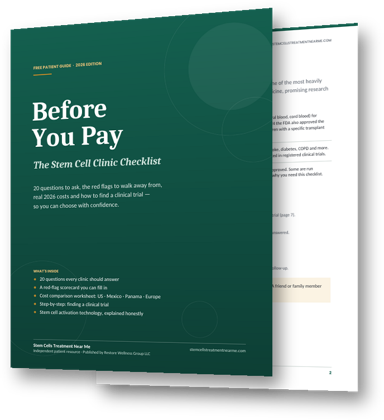
Before You Pay: The Stem Cell Clinic Checklist
- 20 questions every legitimate clinic should answer in writing
- A red-flag scorecard to spot unregulated marketing
- Realistic 2026 cost ranges: US, Mexico, Panama & Europe
- How to find a registered clinical trial
Keep reading
- What Is Stem Cell Therapy? A Plain-Language Guide for Patients
- How Much Does Stem Cell Therapy Cost in 2026?
- How to Find a Legitimate Stem Cell Clinic Near You
Medical Disclaimer: This article is for informational purposes only and does not constitute medical advice. Always consult a qualified medical professional before pursuing any treatment. See our full Medical Disclaimer.
Exploring your stem cell options? Use our free Clinic Finder to learn how to find and vet a legitimate stem cell clinic near you.